

Introduction
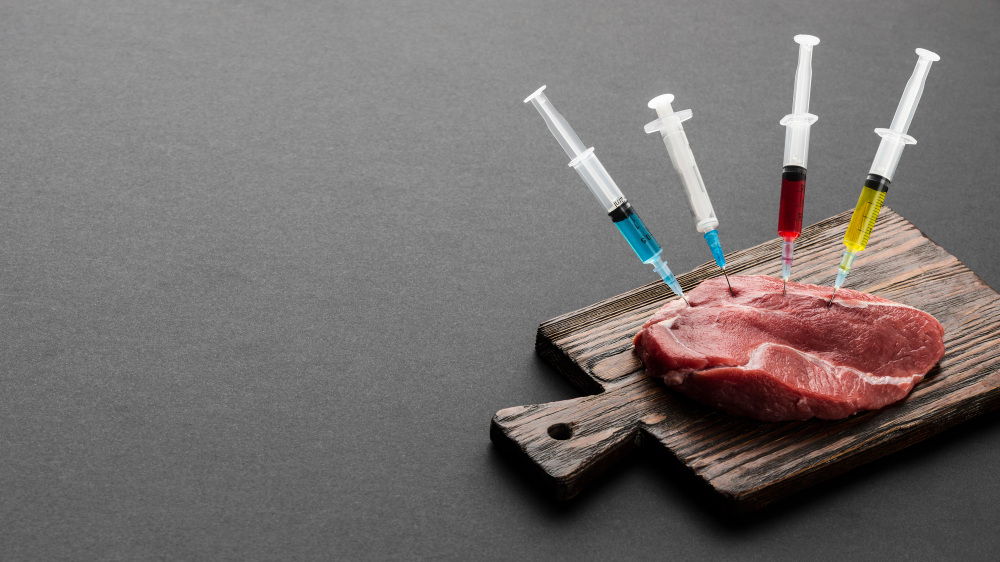
Lab Grown Meat is one of the latest products in the world of nutritional science. It is produced not through the conventional method of animal husbandry, but it is produced in the laboratory. Currently, it is still at the level of laboratory study and has yet to penetrate into the consumer market. When Lab Grown Meat is to be marketed later, the acceptance of consumers of this product should be carefully considered. For an instance, if it is intended for Muslim consumers, Lab Grown Meat should fulfil the Halal standards in Islam.
In Islam, meat is only halal if it is from certain animals that are slaughtered and treated in a certain manner, others argue that this may be moot if no animal is slaughtered in the first place. A Reuters report cited the Islamic Institute of Orange County in California as saying that “there does not appear to be any objection” in eating lab-grown meat. But perhaps the lack of objection is because lab-grown meat is not mentioned in the Quran in the first place. So this article aims to discuss Lab Grown Meat in Islamic Perspective.
Lab Grown Meat
The Concept of Lab Grown Meat
Scientists have resorted to various terms to depict Lab Grown Meat. Among the terms used are Lab Grown Meat (Tuomisto and de Mattos 2011), cultured beef (Post 2014), lab-meat (Coghlan 2011), lab-grown meat (Russell and Giner-Sorolla 2011), artificial meat (Orzechowski 2015) and in vitro meat (Zuhaib Fayaz Bhat et al. 2015). In general, Lab Grown Meat is produced outside of the animal’s body through cell production from specific stem cells in combination with tissue engineering for tissue generation (Bhat et al. 2014). The stem cells and tissues are placed in the right medium for growth and maturation into muscle fibres, which is the main component of meat. The medium must have all the nutrients and substrates needed for cells and tissues or the stem cells to proliferate and mature (Bhat et al. 2015).
In short, the concept of Lab Grown Meat production evolves and may differ in several key ways including type of stem cells used, the production methods and conditions, and the intended products. Normally, the stem cells should be originally extracted from specific tissues of an animal such as a cow. These cell lines are then grown ex vivo or outside the animal bodies normally on a petri dish for a small scale production under proper conditions. Once, the new grown cells (forming tissues) have grown in an appropriate amount, the original source of tissues are discarded. The new grown cells are retrieved and conditioned physically to achieve Lab Grown Meat with relatively similar appearance and taste as traditional meat.
The History of Lab Grown Meat
In 1932, Winston Churchill had predicted that in the future, meat can be produced in isolation from the animal body (Churchill 1932). In reality, the idea was not his brainchild, because 2 years earlier, a writer Fredick Edwin Smith had first introduced the idea (Smith 1930). It is also believed that Winston got this idea from his friend (Post 2014), a scientist named Alexis Carrel who had successfully ensured that the embryonic chicken heart could live ex vivo for a long period of time (Carrel 1937). It was the first success of that kind. In 1943, a novel writer who wrote science fiction had reflected on the use of Lab Grown Meat in restaurants in his novel entitled Ravage (Bhat et al. 2015).
At that time, cell and especially tissue culture technologies were still in their infancies and making meat with this technology was not an urgent priority. Therefore, the idea of Lab Grown Meat remained as a dream for several decades. However, after the discoveries of the muscle stem cells (Seale and Rudnicki 2000) and its ability to differentiate and proliferate into muscle cells, the idea of Lab Grown Meat was gradually revitalized (Post 2014; Van- denburgh et al. 1996).
In 1999, Willem Van Eelen who came from the Netherlands became the first scientist who had applied and attained the patent at the international and USA level for the concept of meat processing using the meat culture technique (Schneider 2013). The patent is titled Industrial Production of Meat Using Cell Culture Methods (Eelen 1998). The main reason he was very interested in culturing meat was his experience with starvation as a prisoner of war in the Second World War (Specter 2011).
Three years later, a group of scientists led by Benjaminson had successfully cultured the muscle tissues of a gold fish (Carassius auratus) in a petri dish. The technique used is almost similar to the technique adopted by Alexis Carrel. The main purpose of his study was to find an alternative food resource to sustain a long journey in space from the Earth to the Moon. His study was funded by NASA through a Small Business Innovative Research (SBIR) grant with a value of USD 62,000 (NASA 1998). The outcome of his study was presented to several panel members for testing. The cultured gold fish meat was cooked with olive oil and several types of spices. The panel members had concluded that the meat was something edible (Benjaminson et al. 2002).
Mark Post was the first scientist to produce cultured beef burger meat. The meat was cooked and tested by two panel members in the Riverside Studios on August 5, 2013 (Beef 2013). The panel comprised of Josh Schonwald, the writer of the book The Taste of Tomorrow, and Hanni Rutzler, a nutritionist from Austria. The cost to produce the cultured beef (85 g) was USD 330,000, and the whole process of production took three months (Post 2014). He used stem cells that were extracted from live cattle’s thigh. According to Mark Post, the meat was yellowish rather than red, and although it tasted like meat, it was still bland. To make its appearance looked like a beef, he added a little red beet juice and saffron for the colour. The panel members were very satisfied with the taste and stated that it tasted very similar to actual meat (Fountain 2013; Ghosh 2013; Zaraska 2013).
The Factors for the Production of Lab Grown Meat
There are many factors that motivate scientists to produce Lab Grown Meat such as the rise in world population, increase in meat demand resulting from prosperity, environmental pollution, animal welfare, mitigating costs especially of breeding, processing, and transport and finally health concerns.
According to the calculation done by WHO and several other researchers, the global population in 2014 has reached 7 billion (WHO, 2014), and it is expected to reach 9.7 billion in 2050 (Wilson, 2013). It is estimated that the consumption of meat is expected to increase with approximately 73% from the year 1999 to 2050 (FAO, 2011). If the increase in food demand, in particularly meat, is not sustainable, the future of global food security will certainly be compromised. Among the alternatives that have been developed by scientists includes the introduction of meat substitute from vegetables (Post, 2012), insects (DeFoliart, 1992), and Lab Grown Meat (Post, 2014).
The increase in world population has also caused a lot of problems to the environment, either directly or indirectly (Hill 2001). As an example, between 1950 and 1990 the consumption of energy has increased five times, water consumption three times, wheat consumption 2.6 times, fish consumption 4.4 times, and the number of slaughtered cows has increased from 2.1 billion (1950) to 4.4 billion (1990) per annum. The production of carbon dioxide (CO2) was reported to triple in size (Corson 1994). Among the methods suggested to curb these environmental hazards is the production of meat in the laboratory, or Lab Grown Meat. The production of Lab Grown Meat will be environmentally friendly, require less land use and consume less water in comparison with conventional meat production method.
Based on the studies done by the European Union, the breeding of livestocks such as cattle and chicken is a major contributor to environmental pollution. Some of the impacts include the greenhouse effect (Greenhouse Gas–GHG) 9.1% and land effect 12.8% (Weiss and Leip, 2012). Based on these statistics, if this Lab Grown Meat manages to widely penetrate the market across Europe, it is expected to reduce the pollution rate of GHG, land use and water by 78–96%, 99% and 82–96%, respectively (Tuomisto and de Mattos, 2011; Tuomisto and Roy, 2012).
Animal welfare seems to attract major concern in the West. This is based on the assessment done by Mark Post who observed an increasing trend of awareness on animal welfare among the Western community. For instance, there were an increased number of writings on animal welfare about it in the time period of 1982–2008 (Post, 2014). Therefore, there are some animal activists who can readily accept the concept of Lab Grown Meat and some have labelled the Lab Grown Meat as ‘victimless meat’ (Bhat et al., 2015). Through meat culture, the number of slaughtered animals can be reduced significantly. In theory, this approach can replace the need of huge processing plants as one single stem cell that can be used to sustain the world’s demand (Bhat and Bhat 2011; Bhat and Fayaz 2011).
Current conventional meat production involves the use of huge energy, land, water and time. Indeed, a report by FAO in 2006 indicates that 30% of the land in this world has been used for meat production and 8% for clean water (FAO 2011). Other study shows almost 50,000 to 100,000 L of water was needed to produce a kilogram of meat (May 2012).
Through meat culture approach, scientists can quantify the nutritional content for human requirements. This makes Lab Grown Meat a healthier and safer choice compared to the conventional meat as there is a causal relationship between meat consumption and increased risk for several diseases such as heart attack, diabetes and cancer (Larsson and Wolk, 2006; Song et al., 2004). The nutritional content of the Lab Grown Meat can be controlled by adjusting the material and fat composition used in the medium of production. The ratio between the saturated fatty acids and the poly-unsaturated fatty acids) can be controlled as well. The saturated fats can be replaced by other types of fats, such as omega-3 (Eelen, 1998).
Technique
The production of Lab Grown Meat can be seen in three aspects: (1) type of stem cells resource, (2) culture technique and (3) culture medium. There are two type of stem cells; Embryonic Stem Cell (ESCs) and Adult Stem Cell (ADSCs/Non-Embryonic Stem Cell).
Generally, ESCs is the best choice for the production of Lab Grown Meat because of its ability to proliferate and expand without limit (Bhat and Bhat, 2011; Bhat and Fayaz, 2011;
Edelman et al., 2005). Theoretically, the ability to proliferate and expand also means it is plausible to produce enough meat to sustain the current global meat demand with only one single ESC. In spite of this advantage, there are several weaknesses related with the use of ESCs in Lab Grown Meat production including lack of information regarding the ‘signal’ (cues) which serves to promote the transformation of ESCs into differentiated muscles cells (Schneider 2013), and some major ethical issues with the use of embryo as a source of ESCs in laboratory studies or real production settings (Langelaan et al., 2010).
A second type of ESCs resource is Myosatellite Cells (MCs) which is one of the adult stem cells. MCs can be extracted from several tissues of adult animals and ‘transform’ into muscle cells (Wagers and Weissman, 2004). MCs cells are considered to be the best choice for Lab Grown Meat production because no external signals are needed to promote transformation into muscle cells. MCs can be isolated from animal livestocks such as cows (Dodson et al., 1987), pigs (Wilschut et al., 2008), chicken (Yablonka-Reuveni et al., 1987), turkey (McFarland et al., 1988), fish (Powell et al., 1989) and sheep (Dodson et al., 1986). However, these adult stem cells also have several weaknesses. Their isolation from animals is not straightforward and typically requires a biopsy (Datar and Betti, 2010; Schneider, 2013). Moreover, prolonged expansion and division of these cells can lead to a cellular phenomenon known as Hayflick limit: Over a long period of cell division, the MCs will lose their ability to divide due to the shortening telomeres (Lazennec and Jorgensen, 2008).
The large scale production ESCs and MCs, require a large number of cell divisions with the inherent potential for cells to become genetically altered, which may lead to formation of benign or malignant tumour cells (Datar and Betti, 2010). There are two stages in meat (tissue) production:
Cell Culture Any tissue culture technique needs massive amounts of cells. This part includes cell harvest and proliferation under a suitable medium (growth medium).
Tissue Formation and Maturation In this phase, one takes groups of cells and allows them to make a tissue, a muscle fibre. For this, the cells are seeded onto a scaffold, mix them in a gel (self-organization) or print them in a 3D configuration.
Cell culture begins with the isolation of the stem cells from animal livestock such as cows or goats and quick transfer into a bioreactor containing appropriate serum –or plant– based medium. The composition of the medium should closely imitate the original in vivo conditions. It may take a few weeks or even months for the stem cells to grow and proliferate within the bioreactor. The stem cells will differentiate into muscle cells based on the available signal (cues) from the medium. Once fully grown, the muscle cells can be harvested, processed and ready to cook. However, this technique is unable to produce three-dimensional structure similar to conventional meat, but is more appropriate as substrate for minced meat products that are subsequently suitable for cooking (Bhat et al., 2015; Datar and Betti, 2010; May, 2012; Smith, 1930).
The second technique known as self-organizing was adopted by a group of scientists led by Benjaminson. The group Lab Grown Meat taken from a gold fish, Carassius auratus, by isolating and growing on a petri dish containing appropriate culture medium for 7 days. This technique is able to generate meat that resembles the actual meat but still lacks blood vessels which functions to provide nutrients to the living muscle cells. The result of the shortage of nutrients and oxygen will cause the meat to die prematurely if it grows beyond a certain (small) size (Benjaminson et al., 2002; Dennis and Kosnik II, 2000).
The final technique was introduced by Dr. Gabor Forgacs in 2011 (Lu 2012). In general, meat is a combination of billions of muscle cells, fat cells, blood cells and so on. By using a 3-D printer, cells can be inserted and injected in the form of ‘ink’ to a surface, usually a piece of removable paper (Aldous, 2006; Mironov et al., 2003). The printed cells such as muscle cells, fat cells or blood cells can then be cultured in an appropriate medium similar to the steps taken in scaffold techniques.
Islam’s View on Lab Grown Meat
Lab Grown Meat is one of the most promising new products created by human, in line with the development of science and technology in human history. As a Muslim, every product and invention must have an adjudication from the perspective of Islam, if is compliant with the requirements of Islamic law. Since the culturing of meat is a new invention that has never been discussed by classical jurists (fuqaha’), an ijtihad by contemporary jurists must look for and provide answers for every technology introduced, whether it meets the requirements of Islamic law or not.
Based on the analysis, we found two main conditions for Lab Grown Meat to be halal. First, cells must be derived from halal slaughtered animal. This could still result in a tremendous down-scaling of animals if we retrieve all of the stem cells of a slaughtered animal. Second, serum should be avoided unless one can prove that meat will not be changed as a result of contact with serum (being potentially unclean). In fact, there are many more reasons to abandon serum:
- Undefined, therefore difficult to regulate, also from a non- religious perspective.
- Unsustainable, we will not be able to harvest sufficient serum to serve our culturing needs.
- There are animal welfare concerns with harvesting foetal bovine serum.
- It may carry disease.
This is important because these products and inventions will be used by muslims in their daily lives and therefore need to be in line with the rules that are laid down by Allah through His prophets or the scriptures that He sent. Indeed, Islam is a religion that has answers and solutions to any problem that arises.
Raw meats are generally treated like toxic waste in our kitchen. It is bought separately in packaging and once it touches our sink or counter, those surfaces have to be disinfected. This is because there are feces inside the meat that contain intestinal pathogen that carries the risk of salmonella, e-coli, etc. Meat has to be cooked to kill these pathogens or we might get sick. With meat 2.0, or better known as lab grown meat, in vitro meat or clean meat, there will be no intestines for the slab of meat to be part of. We just grow the muscle or parts that we want to eat!
Lab grown meat is created by taking small tissue from an animal. The tissue is filtered and isolated for cells that can be grown. It will then be provided warmth and oxygen, feed salt, sugar and protein in a cell culture. Basically, the scientists trick the cell into thinking that it is still in the animal. Then it will naturally replicate, grow muscle, fat and connective tissue, and turn into our food. Initially the challenge was to recreate meat that we are used to, therefore the labs were only producing burger patties and nuggets. However, very recently a lab has successfully created the first ever lab grown steak for consumption.
Conclusion
- Since, no animal slaughtering is involved in the production of lab-grown meat, the Islamic religious scholars may find it not meeting the Islamic requirements. This can potentially impact upon the export of halal meat from the United States to the Muslim countries.
- For whatever reason, some consumers may want to avoid the lab-grown meat. Therefore, lab-grown meat should be clearly stated on the product label so that consumers can make an informed decision at the grocery store.
- The debate on how lab-grown meat is to be labeled continues and some states, such as Missouri, have passed bills that only conventional meat gets to be labeled as “meat” to protect the traditional agriculture. It would be nice if major halal certifications organisations could come up with their views on lab-grown meat, through “Ijtehad”, and let those views be known to public. Public awareness of their views will help many consumers to make an informed decision when meat and poultry products, grown in the laboratories, become available in the supermarkets and restaurants. [ ]
Mohammad Afrizal
Santri PPM Aswaja Nusantara, Alumni Teknik Komputer UGM
Reference
- Abdulaziz Sachedina, Islamic Biomedical Ethics: Principles and Application, Oxford University Press, Inggris, 2011
- David F. Smith dan Jim Phillips, Food, science, policy and regulation in the 20th century, Routledge, London, 2000
- Yunes Ramadan Al-Teinaz dan Stuart Spear, The Halal Food Handbook, Wiley-Blackwell, London, 2020.
*Artikel ini sebelumnya telah dimuat di Jurnal Aswaja Nusantara (Volume V, Oktober 2024).

